New Beginnings and Beliefs

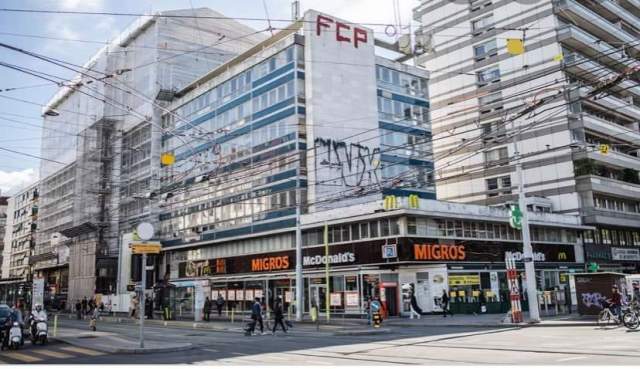
Our first ever area we lived in Geneva, was called La Servette. It is not far from the train station therefore not far from central Geneva. We were nestled near the heart of Geneva. Our home at the time, was a shared accommodation as we lived at the top, pretty much the attic of the house. There was a bedroom, a bathroom and a living room. We had to share the kitchen with other lodgers. The best of all, we had access to a massive garden.

Whenever our parents had the time, especially during the weekends, we would host barbecues. My mum would invite either relatives and friends from Guinea-Bissau. My dad, who knew so much about the Guinean culture during his time there, couldn’t be more delighted. My dad could speak the language fluently. We all enjoyed the gatherings so much, and it was nice to spend time with people who shared the same cultures and values.

At the time, during the mid 80s, an avalanche of Portuguese people fled Portugal in search of a better life. However, people from Guinea-Bissau were not in Geneva as much as the Portuguese were. People from Guinea-Bissau went to Portugal or France. As explained previously, Switzerland is still a country difficult to settle and to live there.
I wonder how my mum did in the beginning? I would lose hope. Our faith as we are Catholics, played a huge part in our settlement in Geneva. In fact, Catholics in Portugal represent 96% of the population. We were raised Catholics since birth. Thankfully for that as it has helped us a great deal. Well, my mum attended a parish called La Sainte Trinité. Straight away, when we started attending church, we were part of the community of the parish.
The church helped us so much. In fact, the priest alone would remain in our lives until his passing. We met many families and nice people there. At the time, I wouldn’t consider ourselves as refugees, simply my mum didn’t have the right papers when she arrived and was simply working towards getting that sorted. So our beginning in Switzerland was not completely legal if that makes sense. Nevertheless, our parents were working hard and ensured our settling in was smooth. La Sainte Trinité, for us and other families in need, represented a refuge, a haven and a gathering beyond the church services. Even though my dad was not Catholic, the church helped him as well.

As the start of school was looming ever closer, unfortunately we didn’t have a school place yet nor the right papers to register. It was impossible for us to attend a public school (which was free). Worried, my mum asked the priest for advice. The priest in turn introduced my mum to nuns who fortunately for us ran a private Catholic school. The problem was private schools are very expensive, especially in Geneva. So how could my mum possibly afford to fund for it? As we were faced with the impossible, our faith played an important role in our admission to l’Externat Sainte Marie.

The nuns offered my mum work in the school, she would work with children in the nursery and we were registered to start in September almost the same year we arrived in Geneva. All the paper work was finalised for our admission in the school, the fee was waved in return for my mum’s employment. Prior of my mum accepting her new job offer, she worked tirelessly as a cleaner, often taking us along. I recalled many things I broke as I was still up to my mischiefs. Soon, she wouldn’t have to clean or babysit again and have a better way to make ends meet.

My mum prepared us for school, reminding us to behave, follow instructions and above all, to learn the culture and French. I must admit, French is not an easy language to learn. Before we started school, we couldn’t speak French fluently so school would help us, or so we thought. I was excited to start school and meet new friends and I was nervous at the same time as I couldn’t speak French properly at the time. I was only 5.
Unknown to me, I was on the road to Calvary as soon as my school life started in Switzerland. My school life in Geneva would have a devastating consequence psychologically.
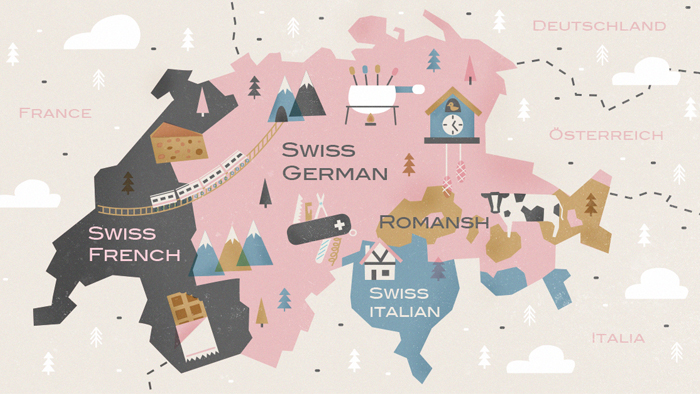
Official language spoken in Switzerland

The four national languages of Switzerland are GermanFrenchItalian and Romansh. All but Romansh maintain equal status as official languages at the national level within the Federal Administration of the Swiss Confederation.

German

Swiss German is spoken in the northern, eastern, and central parts of the country, and is spoken by 63 % of the population, making it the primary language in Switzerland. Its speakers refer to it as Dialekt, Mundart, or just Dütsch.

However, if you decide to study in one of the Swiss German-speaking cantons, you should know that this language also has a range of different dialects. Therefore, it can be rather tricky to understand if you are used to speaking standard German.

But don’t let this discourage you! Standard German is still used for formal correspondence, in books, and in the newspaper, which makes things a bit easier.

Swiss German, on the other hand, is a collection of Alemannic dialects no longer spoken in Germany or Austria, peppered with a whole lot of French expressions. The Swiss Germans take pride in the diversity of their dialects.

You’ll find the same words being used differently in Zurich, Bern, or Basel. Again, no need to worry, when in doubt, politely ask for clarification! 

French

Swiss French is the second most popular language in Switzerland. It is spoken mostly in western Switzerland, covering the cantons of Geneva, Vaud, Neuchâtel, and Jura. Despite the name, there is very little difference between the French spoken in Switzerland and that spoken in France. 

Some do claim that Swiss French sounds slower, due to its longer vowels. This is good news for speakers of standard French as they won’t encounter any difficulties chit-chatting with locals from the French-speaking areas. Another advantage for French speakers is that the popular travel destinations, such as Lausanne and Geneva, are entirely French-speaking. 

Italian

Swiss Italian is the language spoken in the canton of Ticino and the southern part of Graubünden (Canton Grigioni). This part of Switzerland boasts a unique blend of Swiss and Italian culture, which is just one of the reasons to visit and study here.

Known historically as Lombard, Swiss Italian is spoken by about 350,000 people. It is also influenced by German and French, so some differences might be confusing if you studied or speak standard Italian. Don’t worry, though; you might still manage to communicate pretty well.

Romansh

The final piece in this Swiss linguistic treat is Romansh. With only 37,000 speakers, it is the language with the fewest speakers in Switzerland. But that doesn’t mean its history is any less rich!

Like Italian and French, Romansh is a Romance language. In 15 B.C., when the Romans conquered the province of Rhaetia, their language was influenced by that spoken by the native people. This unusual combination created Rumantsch.

Although not very famous outside of Switzerland, Romansh is used in governance, education, and is spoken freely as a community language. While there are different dialects of Romansh, a linguistic consensus was used to create the language used today.

What’s even more impressive about this language is the fact that it survived into the 21st century. Now, that would make for a compelling linguistic study!

Fresh Beginning in Switzerland

Instead of exploring Geneva as planned the next day, I was rushed to hospital.
It all started when blisters aggressively covered soles of my feet. When I arrived at the hospital, the doctor was shocked at the sight of my feet. He
admitted to my mum he had never seen anything like it. He pressed my mum for an explanation.
My mum explained that I lived in Guinea-Bissau for a couple of years. The doctor confirmed my initial feeling about the unbearable scorching heat. My
body wasn’t used to it. Strange right? since I used to live in Portugal. However, the heat from Guinea-Bissau was much worse and unforgiving. After my
hospital treatment, I finally left and returned home. For a moment, looking at my feet, the painful memories of my time in Guinea-Bissau were marked for me to reminisce. As time went by, the scars vanished without a trace. The nightmares of my time in Guinea-Bissau also disappeared.

Finally, my new life and experiences in Switzerland can begin. Ah, Switzerland.


Even the name sounds so exquisite and appealing. Looking around, I was enchanted by the charming sights. My eyes were savouring so much beauty
and were hungry for more. The beautiful ever present mountains were constantly
following us everywhere I look. Even the sky couldn’t resist its charm. I enjoyed the view of the majestic mountains kissing the sky. The fresh air was so pure which filled my lungs. I was literally taking it all in.
My parents were always working, that’s the one thing I remembered about my parents’ lives in Switzerland. They both worked so hard and we didn’t spend that much time together as a family.
At the time, and still today, Switzerland is not an easy country to live let alone settle. The only way you can make it easier to live in Switzerland ironically, is by working constantly. Also, you need to have the right papers (permits ) to
live in Switzerland, even as an European. Switzerland is not part of the European union which makes it harder coming from Europe and work there at the time. Not sure if it has become easier now, but what I do know is before
even considering a life in Switzerland, you need to meet many requirements and apply for the right permits. To make matters worse, my mum didn’t have permits when she went to live there and was doing many cleaning jobs. My dad went from instructing builders what to do as an architect, to being a builder himself in Switzerland. He sure didn’t like it. His architect position simply wasn’t recognised in Switzerland. He had to start from scratch.

As children, we had to be looked after since our parents had to work so hard in order to build up our new life in Switzerland. My mum signed us up for a daily holiday camp where we’d go from morning to late afternoon. The camp was
slightly outside Geneva. So each day, our mum would drop us off at the coach station. Once inside the coach, we enjoyed the journey simply because we enjoyed looking at the forever reliable mountains smiling at us. Once we arrived at the camp, we enjoyed the activities despite the fact me and my sister didn’t speak French at the time (the official language in Geneva).  Nevertheless, each day we had so much fun whether it was exploring the nature, the mountains or fun games. We made friends along the way despite the fact we didn’t understand them and they didn’t understand us either. We were always looking forward to the next day for more fun. As you might predict, the fun I had wouldn’t last long.